Bfd Static Route6
Tests to check BFD protocol in static routes for IPv6.
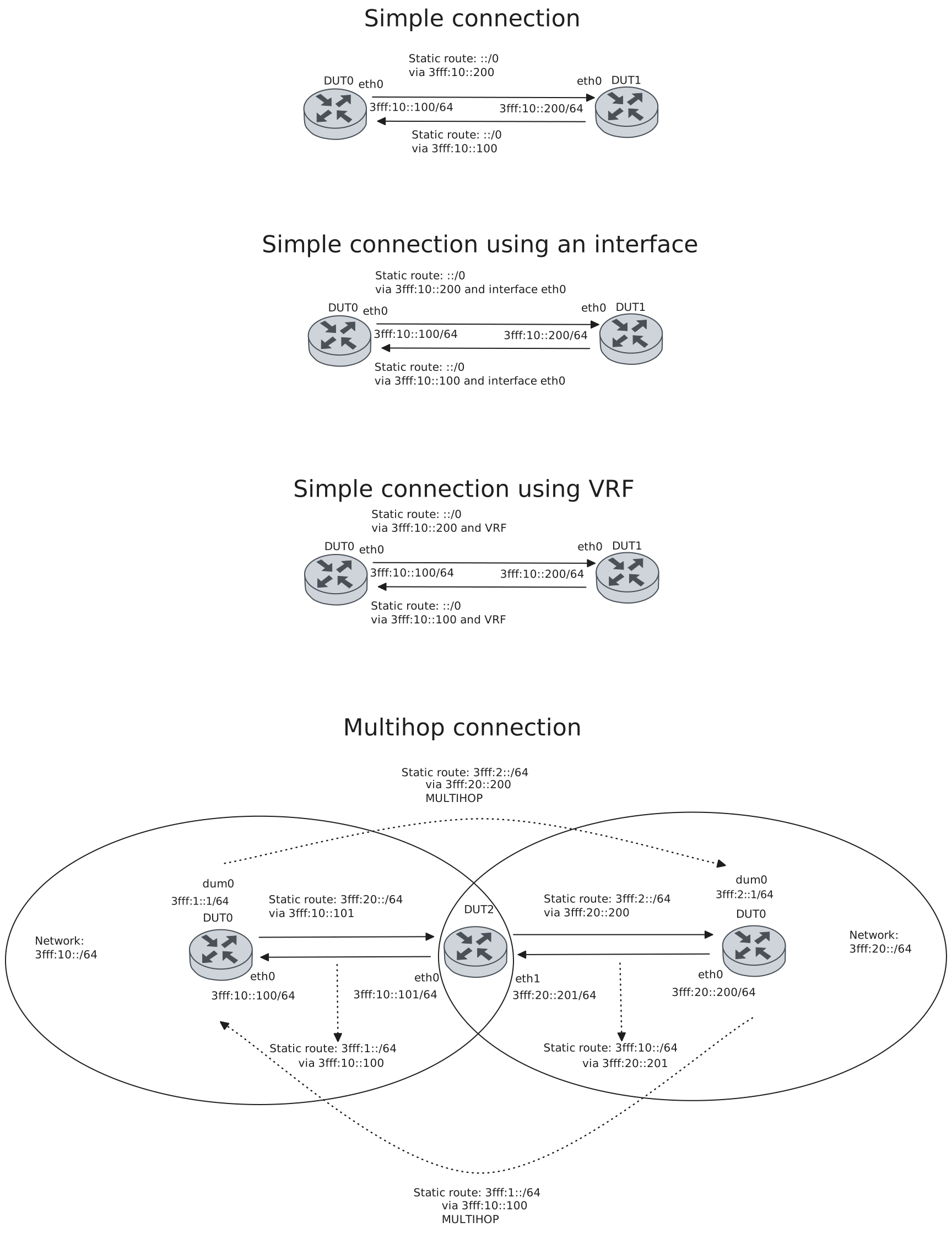
Test Connection With Next Hop IPv6
Description
Tests connection between two devices with BFD in static routes using the gateway as the BFD peer, checking if they are each others peers and their status is up and installed.
Scenario
Step 1: Set the following configuration in DUT0 :
set interfaces ethernet eth0 address '3fff:10::100/64'
set protocols static route6 '::/0' next-hop '3fff:10::200' bfd
set system login user admin authentication encrypted-password '$6$GSjsCj8gHLv$/VcqU6FLi6CT2Oxn0MJQ2C2tqnRDrYKNF8HIYWJp68nvXvPdFccDsT04.WtigUONbKYrgKg8d6rEs8PjljMkH0'
Step 2: Set the following configuration in DUT1 :
set interfaces ethernet eth0 address '3fff:10::200/64'
set protocols static route6 '::/0' next-hop '3fff:10::100' bfd
set system login user admin authentication encrypted-password '$6$GSjsCj8gHLv$/VcqU6FLi6CT2Oxn0MJQ2C2tqnRDrYKNF8HIYWJp68nvXvPdFccDsT04.WtigUONbKYrgKg8d6rEs8PjljMkH0'
Note
Check connectivity
Step 3: Ping IP address 3fff:10::200 from DUT0:
admin@DUT0$ ping 3fff:10::200 count 1 size 56 timeout 1Show output
PING 3fff:10::200(3fff:10::200) 56 data bytes
64 bytes from 3fff:10::200: icmp_seq=1 ttl=64 time=227 ms

--- 3fff:10::200 ping statistics ---
1 packets transmitted, 1 received, 0% packet loss, time 0ms
rtt min/avg/max/mdev = 226.886/226.886/226.886/0.000 ms
Step 4: Ping IP address 3fff:10::100 from DUT1:
admin@DUT1$ ping 3fff:10::100 count 1 size 56 timeout 1Show output
PING 3fff:10::100(3fff:10::100) 56 data bytes
64 bytes from 3fff:10::100: icmp_seq=1 ttl=64 time=0.193 ms

--- 3fff:10::100 ping statistics ---
1 packets transmitted, 1 received, 0% packet loss, time 0ms
rtt min/avg/max/mdev = 0.193/0.193/0.193/0.000 ms
Note
Check that the operational command ‘protocols bfd show static route’ works, and shows that they are each other’s peers and that their status is installed, indicating that the next-hop router is reachable
Step 5: Run command protocols bfd show static route at DUT0 and check if output matches the following regular expressions:
3fff:10::200
status: installed
Show output
Showing BFD monitored static routes:

  Next hops:
    VRF default IPv4 Unicast:

    VRF default IPv4 Multicast:

    VRF default IPv6 Unicast:
        ::/0 peer 3fff:10::200 (status: installed)
Step 6: Run command protocols bfd show static route at DUT1 and check if output matches the following regular expressions:
3fff:10::100
status: installed
Show output
Showing BFD monitored static routes:

  Next hops:
    VRF BFD IPv4 Unicast:

    VRF BFD IPv4 Multicast:

    VRF BFD IPv6 Unicast:
    VRF BGP IPv4 Unicast:

    VRF BGP IPv4 Multicast:

    VRF BGP IPv6 Unicast:
    VRF VRF1 IPv4 Unicast:

    VRF VRF1 IPv4 Multicast:

    VRF VRF1 IPv6 Unicast:
    VRF WAN1 IPv4 Unicast:

    VRF WAN1 IPv4 Multicast:

    VRF WAN1 IPv6 Unicast:
    VRF WAN2 IPv4 Unicast:

    VRF WAN2 IPv4 Multicast:

    VRF WAN2 IPv6 Unicast:
    VRF default IPv4 Unicast:

    VRF default IPv4 Multicast:

    VRF default IPv6 Unicast:
        ::/0 peer 3fff:10::100 (status: installed)
    VRF tenant1 IPv4 Unicast:

    VRF tenant1 IPv4 Multicast:

    VRF tenant1 IPv6 Unicast:
    VRF tenant2 IPv4 Unicast:

    VRF tenant2 IPv4 Multicast:

    VRF tenant2 IPv6 Unicast:
    VRF tenant3 IPv4 Unicast:

    VRF tenant3 IPv4 Multicast:

    VRF tenant3 IPv6 Unicast:
    VRF vrf-responder IPv4 Unicast:

    VRF vrf-responder IPv4 Multicast:

    VRF vrf-responder IPv6 Unicast:
Note
Check that they are each other’s peers and that their status is up (the BFD session has beedn successfully established)
Step 7: Run command protocols bfd show peers at DUT0 and check if output matches the following regular expressions:
3fff:10::200
Status: up
Show output
BFD Peers:
        peer 3fff:10::200 vrf default
                ID: 2702528806
                Remote ID: 4197289362
                Active mode
                Status: up
                Uptime: 1 second(s)
                Diagnostics: ok
                Remote diagnostics: ok
                Peer Type: dynamic
                RTT min/avg/max: 0/0/0 usec
                Local timers:
                        Detect-multiplier: 3
                        Receive interval: 300ms
                        Transmission interval: 300ms
                        Echo receive interval: 50ms
                        Echo transmission interval: disabled
                Remote timers:
                        Detect-multiplier: 3
                        Receive interval: 300ms
                        Transmission interval: 300ms
                        Echo receive interval: 50ms
Step 8: Run command protocols bfd show peers at DUT1 and check if output matches the following regular expressions:
3fff:10::100
Status: up
Show output
BFD Peers:
        peer 3fff:10::100 vrf default
                ID: 4197289362
                Remote ID: 2702528806
                Active mode
                Status: up
                Uptime: 2 second(s)
                Diagnostics: ok
                Remote diagnostics: ok
                Peer Type: dynamic
                RTT min/avg/max: 0/0/0 usec
                Local timers:
                        Detect-multiplier: 3
                        Receive interval: 300ms
                        Transmission interval: 300ms
                        Echo receive interval: 50ms
                        Echo transmission interval: disabled
                Remote timers:
                        Detect-multiplier: 3
                        Receive interval: 300ms
                        Transmission interval: 300ms
                        Echo receive interval: 50ms
Test Connection With Next Hop And Interface IPv6
Description
Tests connection between two devices with BFD in static routes using the gateway as the BFD peer and an interface, checking if they are each others peers and their status is up and installed.
Scenario
Step 1: Set the following configuration in DUT0 :
set interfaces ethernet eth0 address '3fff:10::100/64'
set protocols static route6 '::/0' next-hop '3fff:10::200' interface eth0 bfd
set system login user admin authentication encrypted-password '$6$GSjsCj8gHLv$/VcqU6FLi6CT2Oxn0MJQ2C2tqnRDrYKNF8HIYWJp68nvXvPdFccDsT04.WtigUONbKYrgKg8d6rEs8PjljMkH0'
Step 2: Set the following configuration in DUT1 :
set interfaces ethernet eth0 address '3fff:10::200/64'
set protocols static route6 '::/0' next-hop '3fff:10::100' interface eth0 bfd
set system login user admin authentication encrypted-password '$6$GSjsCj8gHLv$/VcqU6FLi6CT2Oxn0MJQ2C2tqnRDrYKNF8HIYWJp68nvXvPdFccDsT04.WtigUONbKYrgKg8d6rEs8PjljMkH0'
Note
Check connectivity
Step 3: Ping IP address 3fff:10::200 from DUT0:
admin@DUT0$ ping 3fff:10::200 count 1 size 56 timeout 1Show output
PING 3fff:10::200(3fff:10::200) 56 data bytes
64 bytes from 3fff:10::200: icmp_seq=1 ttl=64 time=200 ms

--- 3fff:10::200 ping statistics ---
1 packets transmitted, 1 received, 0% packet loss, time 0ms
rtt min/avg/max/mdev = 199.551/199.551/199.551/0.000 ms
Step 4: Ping IP address 3fff:10::100 from DUT1:
admin@DUT1$ ping 3fff:10::100 count 1 size 56 timeout 1Show output
PING 3fff:10::100(3fff:10::100) 56 data bytes
64 bytes from 3fff:10::100: icmp_seq=1 ttl=64 time=0.247 ms

--- 3fff:10::100 ping statistics ---
1 packets transmitted, 1 received, 0% packet loss, time 0ms
rtt min/avg/max/mdev = 0.247/0.247/0.247/0.000 ms
Note
Check that the operational command ‘protocols bfd show static route’ works, and shows that they are each other’s peers and that their status is installed, indicating that the next-hop router is reachable
Step 5: Run command protocols bfd show static route at DUT0 and check if output matches the following regular expressions:
3fff:10::200
status: installed
Show output
Showing BFD monitored static routes:

  Next hops:
    VRF default IPv4 Unicast:

    VRF default IPv4 Multicast:

    VRF default IPv6 Unicast:
        ::/0 peer 3fff:10::200 (status: installed)
Step 6: Run command protocols bfd show static route at DUT1 and check if output matches the following regular expressions:
3fff:10::100
status: installed
Show output
Showing BFD monitored static routes:

  Next hops:
    VRF BFD IPv4 Unicast:

    VRF BFD IPv4 Multicast:

    VRF BFD IPv6 Unicast:
    VRF BGP IPv4 Unicast:

    VRF BGP IPv4 Multicast:

    VRF BGP IPv6 Unicast:
    VRF VRF1 IPv4 Unicast:

    VRF VRF1 IPv4 Multicast:

    VRF VRF1 IPv6 Unicast:
    VRF WAN1 IPv4 Unicast:

    VRF WAN1 IPv4 Multicast:

    VRF WAN1 IPv6 Unicast:
    VRF WAN2 IPv4 Unicast:

    VRF WAN2 IPv4 Multicast:

    VRF WAN2 IPv6 Unicast:
    VRF default IPv4 Unicast:

    VRF default IPv4 Multicast:

    VRF default IPv6 Unicast:
        ::/0 peer 3fff:10::100 (status: installed)
    VRF tenant1 IPv4 Unicast:

    VRF tenant1 IPv4 Multicast:

    VRF tenant1 IPv6 Unicast:
    VRF tenant2 IPv4 Unicast:

    VRF tenant2 IPv4 Multicast:

    VRF tenant2 IPv6 Unicast:
    VRF tenant3 IPv4 Unicast:

    VRF tenant3 IPv4 Multicast:

    VRF tenant3 IPv6 Unicast:
    VRF vrf-responder IPv4 Unicast:

    VRF vrf-responder IPv4 Multicast:

    VRF vrf-responder IPv6 Unicast:
Note
Check that they are each other’s peers and that their status is up (the BFD session has beedn successfully established)
Step 7: Run command protocols bfd show peers at DUT0 and check if output matches the following regular expressions:
3fff:10::200
Status: up
Show output
BFD Peers:
        peer 3fff:10::200 vrf default interface eth0
                ID: 2405094067
                Remote ID: 3077482928
                Active mode
                Status: up
                Uptime: 1 second(s)
                Diagnostics: ok
                Remote diagnostics: ok
                Peer Type: dynamic
                RTT min/avg/max: 0/0/0 usec
                Local timers:
                        Detect-multiplier: 3
                        Receive interval: 300ms
                        Transmission interval: 300ms
                        Echo receive interval: 50ms
                        Echo transmission interval: disabled
                Remote timers:
                        Detect-multiplier: 3
                        Receive interval: 300ms
                        Transmission interval: 300ms
                        Echo receive interval: 50ms
Step 8: Run command protocols bfd show peers at DUT1 and check if output matches the following regular expressions:
3fff:10::100
Status: up
Show output
BFD Peers:
        peer 3fff:10::100 vrf default interface eth0
                ID: 3077482928
                Remote ID: 2405094067
                Active mode
                Status: up
                Uptime: 2 second(s)
                Diagnostics: ok
                Remote diagnostics: ok
                Peer Type: dynamic
                RTT min/avg/max: 0/0/0 usec
                Local timers:
                        Detect-multiplier: 3
                        Receive interval: 300ms
                        Transmission interval: 300ms
                        Echo receive interval: 50ms
                        Echo transmission interval: disabled
                Remote timers:
                        Detect-multiplier: 3
                        Receive interval: 300ms
                        Transmission interval: 300ms
                        Echo receive interval: 50ms
Test Connection With Next Hop And Next Hop VRF IPv6
Description
Tests connection between two devices with BFD in static routes using the gateway as the BFD peer and a leaked route with a nexthop in the specified VRF ID, checking if they are each others peers and their status is up and installed.
Scenario
Step 1: Set the following configuration in DUT0 :
set interfaces ethernet eth0 address '3fff:10::100/64'
set interfaces ethernet eth0 vrf VRF
set protocols static route6 '::/0' next-hop '3fff:10::200' next-hop-vrf VRF bfd
set system login user admin authentication encrypted-password '$6$GSjsCj8gHLv$/VcqU6FLi6CT2Oxn0MJQ2C2tqnRDrYKNF8HIYWJp68nvXvPdFccDsT04.WtigUONbKYrgKg8d6rEs8PjljMkH0'
set system vrf VRF
Step 2: Set the following configuration in DUT1 :
set interfaces ethernet eth0 address '3fff:10::200/64'
set interfaces ethernet eth0 vrf VRF
set protocols static route6 '::/0' next-hop '3fff:10::100' next-hop-vrf VRF bfd
set system login user admin authentication encrypted-password '$6$GSjsCj8gHLv$/VcqU6FLi6CT2Oxn0MJQ2C2tqnRDrYKNF8HIYWJp68nvXvPdFccDsT04.WtigUONbKYrgKg8d6rEs8PjljMkH0'
set system vrf VRF
Note
Check connectivity
Step 3: Ping IP address 3fff:10::200 from DUT0:
admin@DUT0$ ping 3fff:10::200 count 1 size 56 timeout 1Show output
PING 3fff:10::200(3fff:10::200) 56 data bytes
64 bytes from 3fff:10::200: icmp_seq=1 ttl=64 time=0.228 ms

--- 3fff:10::200 ping statistics ---
1 packets transmitted, 1 received, 0% packet loss, time 0ms
rtt min/avg/max/mdev = 0.228/0.228/0.228/0.000 ms
Step 4: Ping IP address 3fff:10::100 from DUT1:
admin@DUT1$ ping 3fff:10::100 count 1 size 56 timeout 1Show output
PING 3fff:10::100(3fff:10::100) 56 data bytes
64 bytes from 3fff:10::100: icmp_seq=1 ttl=64 time=0.269 ms

--- 3fff:10::100 ping statistics ---
1 packets transmitted, 1 received, 0% packet loss, time 0ms
rtt min/avg/max/mdev = 0.269/0.269/0.269/0.000 ms
Note
Check that the operational command ‘protocols bfd show static route’ works, and shows that they are each other’s peers and that their status is installed, indicating that the next-hop router is reachable
Step 5: Run command protocols bfd show static route at DUT0 and check if output matches the following regular expressions:
3fff:10::200
status: installed
Show output
Showing BFD monitored static routes:

  Next hops:
    VRF default IPv4 Unicast:

    VRF default IPv4 Multicast:

    VRF default IPv6 Unicast:
        ::/0 peer 3fff:10::200 (status: installed)
Step 6: Run command protocols bfd show static route at DUT1 and check if output matches the following regular expressions:
3fff:10::100
status: installed
Show output
Showing BFD monitored static routes:

  Next hops:
    VRF BFD IPv4 Unicast:

    VRF BFD IPv4 Multicast:

    VRF BFD IPv6 Unicast:
    VRF BGP IPv4 Unicast:

    VRF BGP IPv4 Multicast:

    VRF BGP IPv6 Unicast:
    VRF VRF1 IPv4 Unicast:

    VRF VRF1 IPv4 Multicast:

    VRF VRF1 IPv6 Unicast:
    VRF WAN1 IPv4 Unicast:

    VRF WAN1 IPv4 Multicast:

    VRF WAN1 IPv6 Unicast:
    VRF WAN2 IPv4 Unicast:

    VRF WAN2 IPv4 Multicast:

    VRF WAN2 IPv6 Unicast:
    VRF default IPv4 Unicast:

    VRF default IPv4 Multicast:

    VRF default IPv6 Unicast:
        ::/0 peer 3fff:10::100 (status: installed)
    VRF tenant1 IPv4 Unicast:

    VRF tenant1 IPv4 Multicast:

    VRF tenant1 IPv6 Unicast:
    VRF tenant2 IPv4 Unicast:

    VRF tenant2 IPv4 Multicast:

    VRF tenant2 IPv6 Unicast:
    VRF tenant3 IPv4 Unicast:

    VRF tenant3 IPv4 Multicast:

    VRF tenant3 IPv6 Unicast:
    VRF vrf-responder IPv4 Unicast:

    VRF vrf-responder IPv4 Multicast:

    VRF vrf-responder IPv6 Unicast:
Note
Check that they are each other’s peers and that their status is up (the BFD session has beedn successfully established)
Step 7: Run command protocols bfd show peers at DUT0 and check if output matches the following regular expressions:
3fff:10::200
Status: up
Show output
BFD Peers:
        peer 3fff:10::200 vrf VRF
                ID: 2230361276
                Remote ID: 865543246
                Active mode
                Status: up
                Uptime: 1 second(s)
                Diagnostics: ok
                Remote diagnostics: ok
                Peer Type: dynamic
                RTT min/avg/max: 0/0/0 usec
                Local timers:
                        Detect-multiplier: 3
                        Receive interval: 300ms
                        Transmission interval: 300ms
                        Echo receive interval: 50ms
                        Echo transmission interval: disabled
                Remote timers:
                        Detect-multiplier: 3
                        Receive interval: 300ms
                        Transmission interval: 300ms
                        Echo receive interval: 50ms
Step 8: Run command protocols bfd show peers at DUT1 and check if output matches the following regular expressions:
3fff:10::100
Status: up
Show output
BFD Peers:
        peer 3fff:10::100 vrf VRF
                ID: 865543246
                Remote ID: 2230361276
                Active mode
                Status: up
                Uptime: 1 second(s)
                Diagnostics: ok
                Remote diagnostics: ok
                Peer Type: dynamic
                RTT min/avg/max: 0/0/0 usec
                Local timers:
                        Detect-multiplier: 3
                        Receive interval: 300ms
                        Transmission interval: 300ms
                        Echo receive interval: 50ms
                        Echo transmission interval: disabled
                Remote timers:
                        Detect-multiplier: 3
                        Receive interval: 300ms
                        Transmission interval: 300ms
                        Echo receive interval: 50ms
Test Multihop Connection IPv6
Description
Tests multihop connection between two devices in different networks using a third device connected to both networks, checking if they are each others peers and their status is up and installed.
Scenario
Step 1: Set the following configuration in DUT0 :
set interfaces dummy dum0 address '3fff:1::1/64'
set interfaces ethernet eth0 address '3fff:10::100/64'
set protocols static route6 '3fff:20::/64' next-hop '3fff:10::101'
set protocols static route6 '3fff:2::/64' next-hop '3fff:20::200' bfd multihop
set system login user admin authentication encrypted-password '$6$GSjsCj8gHLv$/VcqU6FLi6CT2Oxn0MJQ2C2tqnRDrYKNF8HIYWJp68nvXvPdFccDsT04.WtigUONbKYrgKg8d6rEs8PjljMkH0'
Step 2: Set the following configuration in DUT1 :
set interfaces dummy dum0 address '3fff:2::1/64'
set interfaces ethernet eth0 address '3fff:20::200/64'
set protocols static route6 '3fff:10::/64' next-hop '3fff:20::201'
set protocols static route6 '3fff:1::/64' next-hop '3fff:10::100' bfd multihop
set system login user admin authentication encrypted-password '$6$GSjsCj8gHLv$/VcqU6FLi6CT2Oxn0MJQ2C2tqnRDrYKNF8HIYWJp68nvXvPdFccDsT04.WtigUONbKYrgKg8d6rEs8PjljMkH0'
Step 3: Set the following configuration in DUT2 :
set interfaces ethernet eth0 address '3fff:10::101/64'
set interfaces ethernet eth1 address '3fff:20::201/64'
set protocols static route6 '3fff:1::/64' next-hop '3fff:10::100'
set protocols static route6 '3fff:2::/64' next-hop '3fff:20::200'
set system login user admin authentication encrypted-password '$6$GSjsCj8gHLv$/VcqU6FLi6CT2Oxn0MJQ2C2tqnRDrYKNF8HIYWJp68nvXvPdFccDsT04.WtigUONbKYrgKg8d6rEs8PjljMkH0'
Note
Check connectivity
Step 4: Ping IP address 3fff:20::200 from DUT0:
admin@DUT0$ ping 3fff:20::200 count 1 size 56 timeout 1Show output
PING 3fff:20::200(3fff:20::200) 56 data bytes
64 bytes from 3fff:20::200: icmp_seq=1 ttl=63 time=449 ms

--- 3fff:20::200 ping statistics ---
1 packets transmitted, 1 received, 0% packet loss, time 0ms
rtt min/avg/max/mdev = 449.310/449.310/449.310/0.000 ms
Step 5: Ping IP address 3fff:10::100 from DUT1:
admin@DUT1$ ping 3fff:10::100 count 1 size 56 timeout 1Show output
PING 3fff:10::100(3fff:10::100) 56 data bytes
64 bytes from 3fff:10::100: icmp_seq=1 ttl=63 time=0.347 ms

--- 3fff:10::100 ping statistics ---
1 packets transmitted, 1 received, 0% packet loss, time 0ms
rtt min/avg/max/mdev = 0.347/0.347/0.347/0.000 ms
Note
Check that the operational command ‘protocols bfd show static route’ works, and shows that they are each other’s peers and that their status is installed, indicating that the next-hop router is reachable
Step 6: Run command protocols bfd show static route at DUT0 and check if output matches the following regular expressions:
3fff:20::200
status: installed
Show output
Showing BFD monitored static routes:

  Next hops:
    VRF default IPv4 Unicast:

    VRF default IPv4 Multicast:

    VRF default IPv6 Unicast:
        3fff:2::/64 peer 3fff:20::200 (status: installed)
Step 7: Run command protocols bfd show static route at DUT1 and check if output matches the following regular expressions:
3fff:10::100
status: installed
Show output
Showing BFD monitored static routes:

  Next hops:
    VRF BFD IPv4 Unicast:

    VRF BFD IPv4 Multicast:

    VRF BFD IPv6 Unicast:
    VRF BGP IPv4 Unicast:

    VRF BGP IPv4 Multicast:

    VRF BGP IPv6 Unicast:
    VRF VRF1 IPv4 Unicast:

    VRF VRF1 IPv4 Multicast:

    VRF VRF1 IPv6 Unicast:
    VRF WAN1 IPv4 Unicast:

    VRF WAN1 IPv4 Multicast:

    VRF WAN1 IPv6 Unicast:
    VRF WAN2 IPv4 Unicast:

    VRF WAN2 IPv4 Multicast:

    VRF WAN2 IPv6 Unicast:
    VRF default IPv4 Unicast:

    VRF default IPv4 Multicast:

    VRF default IPv6 Unicast:
        3fff:1::/64 peer 3fff:10::100 (status: installed)
    VRF tenant1 IPv4 Unicast:

    VRF tenant1 IPv4 Multicast:

    VRF tenant1 IPv6 Unicast:
    VRF tenant2 IPv4 Unicast:

    VRF tenant2 IPv4 Multicast:

    VRF tenant2 IPv6 Unicast:
    VRF tenant3 IPv4 Unicast:

    VRF tenant3 IPv4 Multicast:

    VRF tenant3 IPv6 Unicast:
    VRF vrf-responder IPv4 Unicast:

    VRF vrf-responder IPv4 Multicast:

    VRF vrf-responder IPv6 Unicast:
Note
Check that they are each other’s peers and that their status is up (the BFD session has beedn successfully established)
Step 8: Run command protocols bfd show peers at DUT0 and check if output matches the following regular expressions:
3fff:20::200
Status: up
Show output
BFD Peers:
        peer 3fff:20::200 multihop local-address 3fff:10::100 vrf default
                ID: 844513968
                Remote ID: 2982088355
                Active mode
                Minimum TTL: 2
                Status: up
                Uptime: 0 second(s)
                Diagnostics: ok
                Remote diagnostics: ok
                Peer Type: dynamic
                RTT min/avg/max: 0/0/0 usec
                Local timers:
                        Detect-multiplier: 3
                        Receive interval: 300ms
                        Transmission interval: 300ms
                        Echo receive interval: 50ms
                        Echo transmission interval: disabled
                Remote timers:
                        Detect-multiplier: 3
                        Receive interval: 300ms
                        Transmission interval: 300ms
                        Echo receive interval: 50ms
Step 9: Run command protocols bfd show peers at DUT1 and check if output matches the following regular expressions:
3fff:10::100
Status: up
Show output
BFD Peers:
        peer 3fff:10::100 multihop local-address 3fff:20::200 vrf default
                ID: 2982088355
                Remote ID: 844513968
                Active mode
                Minimum TTL: 2
                Status: up
                Uptime: 0 second(s)
                Diagnostics: ok
                Remote diagnostics: ok
                Peer Type: dynamic
                RTT min/avg/max: 0/0/0 usec
                Local timers:
                        Detect-multiplier: 3
                        Receive interval: 300ms
                        Transmission interval: 300ms
                        Echo receive interval: 50ms
                        Echo transmission interval: disabled
                Remote timers:
                        Detect-multiplier: 3
                        Receive interval: 300ms
                        Transmission interval: 300ms
                        Echo receive interval: 50ms
Test DUT0 Source IP IPv6
Description
Captures BFD packets and verifies the source address is correct when packets are sent from DUT0.
Scenario
Step 1: Set the following configuration in DUT0 :
set interfaces ethernet eth0 address '3fff:10::100/64'
set protocols static route6 '::/0' next-hop '3fff:10::200' bfd
set system login user admin authentication encrypted-password '$6$GSjsCj8gHLv$/VcqU6FLi6CT2Oxn0MJQ2C2tqnRDrYKNF8HIYWJp68nvXvPdFccDsT04.WtigUONbKYrgKg8d6rEs8PjljMkH0'
Step 2: Set the following configuration in DUT1 :
set interfaces ethernet eth0 address '3fff:10::200/64'
set protocols static route6 '::/0' next-hop '3fff:10::100' bfd source-ip '3fff:10::100'
set system login user admin authentication encrypted-password '$6$GSjsCj8gHLv$/VcqU6FLi6CT2Oxn0MJQ2C2tqnRDrYKNF8HIYWJp68nvXvPdFccDsT04.WtigUONbKYrgKg8d6rEs8PjljMkH0'
Note
Capture packets and show one to verify that the source address is 3fff:10::100:
Note
Source line:
Show output
26 2025-12-11 20:44:03.021383496 3fff:10::100 → 3fff:10::200 BFD Control 86 Diag: No Diagnostic, State: Down, Flags: 0x00
Test DUT1 Source IP IPv6
Description
Captures BFD packets and verifies the source address is correct when packets are sent from DUT1.
Scenario
Step 1: Set the following configuration in DUT0 :
set interfaces ethernet eth0 address '3fff:10::100/64'
set protocols static route6 '::/0' next-hop '3fff:10::200' bfd source-ip '3fff:10::200'
set system login user admin authentication encrypted-password '$6$GSjsCj8gHLv$/VcqU6FLi6CT2Oxn0MJQ2C2tqnRDrYKNF8HIYWJp68nvXvPdFccDsT04.WtigUONbKYrgKg8d6rEs8PjljMkH0'
Step 2: Set the following configuration in DUT1 :
set interfaces ethernet eth0 address '3fff:10::200/64'
set protocols static route6 '::/0' next-hop '3fff:10::100' bfd
set system login user admin authentication encrypted-password '$6$GSjsCj8gHLv$/VcqU6FLi6CT2Oxn0MJQ2C2tqnRDrYKNF8HIYWJp68nvXvPdFccDsT04.WtigUONbKYrgKg8d6rEs8PjljMkH0'
Note
Capture packets and show one to verify that the source address is 3fff:10::200:
Note
Source line:
Show output
23 2025-12-11 20:44:15.877469391 3fff:10::200 → 3fff:10::100 BFD Control 86 Diag: No Diagnostic, State: Down, Flags: 0x00
Test Profile IPv6
Description
Checks that all BFD profile configured parameters are shown.
Scenario
Step 1: Set the following configuration in DUT0 :
set interfaces ethernet eth0 address '3fff:10::100/64'
set protocols bfd profile PFL detect-multiplier 5
set protocols bfd profile PFL echo-interval 60
set protocols bfd profile PFL passive-mode
set protocols bfd profile PFL receive-interval 400
set protocols bfd profile PFL transmit-interval 400
set protocols static route6 '::/0' next-hop '3fff:10::200' bfd profile PFL
set system login user admin authentication encrypted-password '$6$GSjsCj8gHLv$/VcqU6FLi6CT2Oxn0MJQ2C2tqnRDrYKNF8HIYWJp68nvXvPdFccDsT04.WtigUONbKYrgKg8d6rEs8PjljMkH0'
Step 2: Set the following configuration in DUT1 :
set interfaces ethernet eth0 address '3fff:10::200/64'
set protocols static route6 '::/0' next-hop '3fff:10::100' bfd
set system login user admin authentication encrypted-password '$6$GSjsCj8gHLv$/VcqU6FLi6CT2Oxn0MJQ2C2tqnRDrYKNF8HIYWJp68nvXvPdFccDsT04.WtigUONbKYrgKg8d6rEs8PjljMkH0'
Note
Check connectivity
Step 3: Ping IP address 3fff:10::200 from DUT0:
admin@DUT0$ ping 3fff:10::200 count 1 size 56 timeout 1Show output
PING 3fff:10::200(3fff:10::200) 56 data bytes
64 bytes from 3fff:10::200: icmp_seq=1 ttl=64 time=197 ms

--- 3fff:10::200 ping statistics ---
1 packets transmitted, 1 received, 0% packet loss, time 0ms
rtt min/avg/max/mdev = 197.498/197.498/197.498/0.000 ms
Step 4: Ping IP address 3fff:10::100 from DUT1:
admin@DUT1$ ping 3fff:10::100 count 1 size 56 timeout 1Show output
PING 3fff:10::100(3fff:10::100) 56 data bytes
64 bytes from 3fff:10::100: icmp_seq=1 ttl=64 time=0.207 ms

--- 3fff:10::100 ping statistics ---
1 packets transmitted, 1 received, 0% packet loss, time 0ms
rtt min/avg/max/mdev = 0.207/0.207/0.207/0.000 ms
Note
Check that they are each other’s peers and that their status is up (the BFD session has beedn successfully established). Check that all configured profile parameters are shown in DUT0
Step 5: Run command protocols bfd show peers at DUT0 and check if output matches the following regular expressions:
3fff:10::200
Status: up
Detect-multiplier: 5
Echo receive interval: disabled
Echo transmission interval: disabled
Passive mode
Receive interval: 400ms
Transmission interval: 400ms
Show output
BFD Peers:
        peer 3fff:10::200 vrf default
                ID: 661972758
                Remote ID: 4266707206
                Passive mode
                Status: up
                Uptime: 0 second(s)
                Diagnostics: ok
                Remote diagnostics: ok
                Peer Type: dynamic
                RTT min/avg/max: 0/0/0 usec
                Local timers:
                        Detect-multiplier: 5
                        Receive interval: 400ms
                        Transmission interval: 400ms
                        Echo receive interval: disabled
                        Echo transmission interval: disabled
                Remote timers:
                        Detect-multiplier: 3
                        Receive interval: 300ms
                        Transmission interval: 300ms
                        Echo receive interval: 50ms
Step 6: Run command protocols bfd show peers at DUT1 and check if output matches the following regular expressions:
3fff:10::100
Status: up
Show output
BFD Peers:
        peer 3fff:10::100 vrf default
                ID: 4266707206
                Remote ID: 661972758
                Active mode
                Status: up
                Uptime: 0 second(s)
                Diagnostics: ok
                Remote diagnostics: ok
                Peer Type: dynamic
                RTT min/avg/max: 0/0/0 usec
                Local timers:
                        Detect-multiplier: 3
                        Receive interval: 300ms
                        Transmission interval: 300ms
                        Echo receive interval: 50ms
                        Echo transmission interval: disabled
                Remote timers:
                        Detect-multiplier: 5
                        Receive interval: 400ms
                        Transmission interval: 400ms
                        Echo receive interval: disabled