Site-To-Site
This scenario shows how to configure and connect two subnets
with each other through a VPN tunnel and automatically configure
the negotiated remote prefixes as routes. DUT0 acts as a
responder and DUT1 as a initiator.
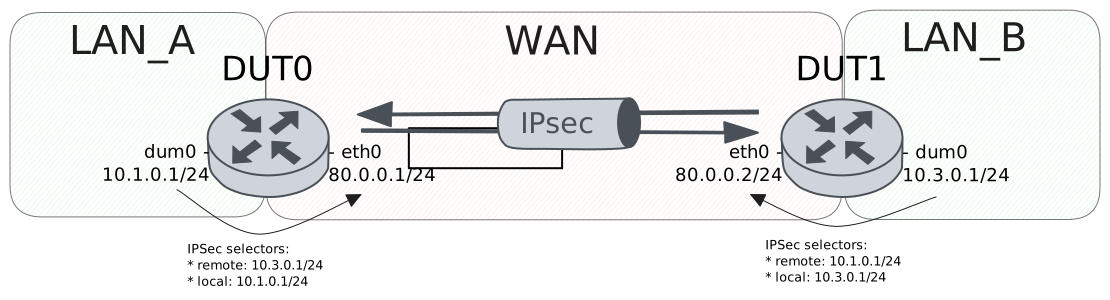
Test Site-To-Site With Basic Route Installation
Description
In this scenario, both devices install routes
for the VPN traffic in the main table.
Scenario
Step 1: Run command protocols ip show route at DUT0 and check if output does not contain the following tokens:
K>* 10.3.0.0/24
Step 2: Set the following configuration in DUT0 :
set interfaces dummy dum0 address 10.1.0.1/24
set interfaces ethernet eth0 address 80.0.0.1/24
set system login user admin authentication encrypted-password '$6$GSjsCj8gHLv$/VcqU6FLi6CT2Oxn0MJQ2C2tqnRDrYKNF8HIYWJp68nvXvPdFccDsT04.WtigUONbKYrgKg8d6rEs8PjljMkH0'
set system vrf main
set vpn ipsec auth-profile AUTH-SA global-secrets ike-psk %any encrypted-secret U2FsdGVkX18U5TqTlTkh4fr9aqXqtcidOaVddCXYpCA=
set vpn ipsec auth-profile AUTH-SA local auth ike-psk id %any
set vpn ipsec auth-profile AUTH-SA remote auth ike-psk id %any
set vpn ipsec esp-group CHILD-SA mode tunnel
set vpn ipsec esp-group CHILD-SA proposal 1 encryption aes256gcm128
set vpn ipsec esp-group CHILD-SA proposal 1 pfs dh-group19
set vpn ipsec ike-group IKE-SA key-exchange ikev2
set vpn ipsec ike-group IKE-SA proposal 1 dh-group 19
set vpn ipsec ike-group IKE-SA proposal 1 encryption aes256gcm128
set vpn ipsec ike-group IKE-SA proposal 1 hash sha256
set vpn ipsec site-to-site peer PEER auth-profile AUTH-SA
set vpn ipsec site-to-site peer PEER connection-type respond
set vpn ipsec site-to-site peer PEER default-esp-group CHILD-SA
set vpn ipsec site-to-site peer PEER ike-group IKE-SA
set vpn ipsec site-to-site peer PEER local-address 80.0.0.1
set vpn ipsec site-to-site peer PEER remote-address 80.0.0.2
set vpn ipsec site-to-site peer PEER tunnel 1 install-routes main
set vpn ipsec site-to-site peer PEER tunnel 1 local prefix 10.1.0.0/24
set vpn ipsec site-to-site peer PEER tunnel 1 remote prefix 10.3.0.0/24
Step 3: Set the following configuration in DUT1 :
set interfaces dummy dum0 address 10.3.0.1/24
set interfaces ethernet eth0 address 80.0.0.2/24
set protocols static route 0.0.0.0/0 next-hop 80.0.0.1
set system login user admin authentication encrypted-password '$6$GSjsCj8gHLv$/VcqU6FLi6CT2Oxn0MJQ2C2tqnRDrYKNF8HIYWJp68nvXvPdFccDsT04.WtigUONbKYrgKg8d6rEs8PjljMkH0'
set system vrf main
set vpn ipsec auth-profile AUTH-SA global-secrets ike-psk %any encrypted-secret U2FsdGVkX18ZP4b16I7RQEO8Iil5VNpSZhkDsf2wUgs=
set vpn ipsec auth-profile AUTH-SA local auth ike-psk id %any
set vpn ipsec auth-profile AUTH-SA remote auth ike-psk id %any
set vpn ipsec esp-group CHILD-SA mode tunnel
set vpn ipsec esp-group CHILD-SA proposal 1 encryption aes256gcm128
set vpn ipsec esp-group CHILD-SA proposal 1 pfs dh-group19
set vpn ipsec ike-group IKE-SA key-exchange ikev2
set vpn ipsec ike-group IKE-SA proposal 1 dh-group 19
set vpn ipsec ike-group IKE-SA proposal 1 encryption aes256gcm128
set vpn ipsec ike-group IKE-SA proposal 1 hash sha256
set vpn ipsec site-to-site peer PEER auth-profile AUTH-SA
set vpn ipsec site-to-site peer PEER connection-type initiate
set vpn ipsec site-to-site peer PEER default-esp-group CHILD-SA
set vpn ipsec site-to-site peer PEER ike-group IKE-SA
set vpn ipsec site-to-site peer PEER local-address 80.0.0.2
set vpn ipsec site-to-site peer PEER remote-address 80.0.0.1
set vpn ipsec site-to-site peer PEER tunnel 1 install-routes main
set vpn ipsec site-to-site peer PEER tunnel 1 local prefix 10.3.0.0/24
set vpn ipsec site-to-site peer PEER tunnel 1 remote prefix 10.1.0.0/24
Step 4: Ping IP address 80.0.0.1 from DUT1:
admin@DUT1$ ping 80.0.0.1 count 1 size 56 timeout 1Show output
PING 80.0.0.1 (80.0.0.1) 56(84) bytes of data.
64 bytes from 80.0.0.1: icmp_seq=1 ttl=64 time=0.226 ms

--- 80.0.0.1 ping statistics ---
1 packets transmitted, 1 received, 0% packet loss, time 0ms
rtt min/avg/max/mdev = 0.226/0.226/0.226/0.000 ms
Step 5: Ping IP address 80.0.0.2 from DUT0:
admin@DUT0$ ping 80.0.0.2 count 1 size 56 timeout 1Show output
PING 80.0.0.2 (80.0.0.2) 56(84) bytes of data.
64 bytes from 80.0.0.2: icmp_seq=1 ttl=64 time=0.344 ms

--- 80.0.0.2 ping statistics ---
1 packets transmitted, 1 received, 0% packet loss, time 0ms
rtt min/avg/max/mdev = 0.344/0.344/0.344/0.000 ms
Step 6: Run command vpn ipsec show sa at DUT0 and check if output matches the following regular expressions:
peer-PEER-tunnel-\d+.+INSTALLEDShow output
vpn-peer-PEER: #1, ESTABLISHED, IKEv2, 6ce09d47679e3a68_i af8d6180dc6c8a31_r*
  local  '80.0.0.1' @ 80.0.0.1[500]
  remote '80.0.0.2' @ 80.0.0.2[500]
  AES_GCM_16-256/PRF_HMAC_SHA2_256/ECP_256
  established 0s ago, rekeying in 21204s
  peer-PEER-tunnel-1: #1, reqid 1, INSTALLED, TUNNEL, ESP:AES_GCM_16-256
    installed 0s ago, rekeying in 3435s, expires in 3960s
    in  cde95517,      0 bytes,     0 packets
    out c0cee231,      0 bytes,     0 packets
    local  10.1.0.0/24
    remote 10.3.0.0/24
Step 7: Run command protocols ip show route at DUT0 and check if output contains the following tokens:
K>* 10.3.0.0/24Show output
Codes: K - kernel route, C - connected, L - local, S - static,
       R - RIP, O - OSPF, I - IS-IS, B - BGP, E - EIGRP, N - NHRP,
       T - Table, v - VNC, V - VNC-Direct, A - Babel, F - PBR,
       f - OpenFabric, t - Table-Direct,
       > - selected route, * - FIB route, q - queued, r - rejected, b - backup
       t - trapped, o - offload failure

IPv4 unicast VRF default:
C>* 10.1.0.0/24 is directly connected, dum0, weight 1, 00:00:06
K * 10.1.0.0/24 [0/0] is directly connected, dum0, weight 1, 00:00:06
L>* 10.1.0.1/32 is directly connected, dum0, weight 1, 00:00:06
K>* 10.3.0.0/24 [0/0] via 80.0.0.2, eth0, weight 1, 00:00:00
C>* 80.0.0.0/24 is directly connected, eth0, weight 1, 00:00:06
K * 80.0.0.0/24 [0/0] is directly connected, eth0, weight 1, 00:00:06
L>* 80.0.0.1/32 is directly connected, eth0, weight 1, 00:00:06
Step 8: Run command vpn ipsec clear sa at DUT1 and expect this output:
Show output
Deleting IPSec SAs... 100.00%
Closed tunnels: 1
Step 9: Run command vpn ipsec initiate peer PEER at DUT1 and expect this output:
Show output
Initiating IPSec SAs... 100.00%
Initiated tunnels: 1
Step 10: Ping IP address 10.1.0.1 from DUT1:
admin@DUT1$ ping 10.1.0.1 local-address 10.3.0.1 count 1 size 56 timeout 1Show output
PING 10.1.0.1 (10.1.0.1) from 10.3.0.1 : 56(84) bytes of data.
64 bytes from 10.1.0.1: icmp_seq=1 ttl=64 time=0.370 ms

--- 10.1.0.1 ping statistics ---
1 packets transmitted, 1 received, 0% packet loss, time 0ms
rtt min/avg/max/mdev = 0.370/0.370/0.370/0.000 ms
Step 11: Initiate a tcp connection from DUT1 to DUT0 and try to send some messages between both endpoints
admin@DUT0$ monitor test connection server 8080 tcp
admin@DUT1$ monitor test connection client 10.1.0.1 8080 tcp local-address 10.3.0.1
Step 12: Run command vpn ipsec show sa at DUT0 and check if output matches the following regular expressions:
[1-9]\d? packetsShow output
vpn-peer-PEER: #2, ESTABLISHED, IKEv2, 181d8397dd17f8d9_i fe846cd094a0ea81_r*
  local  '80.0.0.1' @ 80.0.0.1[500]
  remote '80.0.0.2' @ 80.0.0.2[500]
  AES_GCM_16-256/PRF_HMAC_SHA2_256/ECP_256
  established 2s ago, rekeying in 25611s
  peer-PEER-tunnel-1: #2, reqid 1, INSTALLED, TUNNEL, ESP:AES_GCM_16-256
    installed 2s ago, rekeying in 3296s, expires in 3958s
    in  ccb050f2,    712 bytes,    11 packets,     0s ago
    out cdf7bda1,    660 bytes,    10 packets,     0s ago
    local  10.1.0.0/24
    remote 10.3.0.0/24
Test Site-To-Site With VRF Route Installation
Description
In this scenario, DUT0 install reoutes
in a separate VRF called LAN.
Scenario
Step 1: Run command protocols vrf LAN ip show route at DUT0 and check if output does not contain the following tokens:
K>* 10.3.0.0/24Show output
% VRF LAN not found
Step 2: Set the following configuration in DUT0 :
set interfaces dummy dum0 address 10.1.0.1/24
set interfaces dummy dum0 vrf LAN
set interfaces ethernet eth0 address 80.0.0.1/24
set interfaces ethernet eth0 vrf WAN
set protocols vrf WAN static route 10.1.0.0/24 next-hop-vrf LAN
set system login user admin authentication encrypted-password '$6$GSjsCj8gHLv$/VcqU6FLi6CT2Oxn0MJQ2C2tqnRDrYKNF8HIYWJp68nvXvPdFccDsT04.WtigUONbKYrgKg8d6rEs8PjljMkH0'
set system vrf LAN
set system vrf WAN
set vpn ipsec auth-profile AUTH-SA global-secrets ike-psk %any encrypted-secret U2FsdGVkX19UGcsGJwRxzTzyKf1qxvStz3iWsabgF6k=
set vpn ipsec auth-profile AUTH-SA local auth ike-psk id %any
set vpn ipsec auth-profile AUTH-SA remote auth ike-psk id %any
set vpn ipsec esp-group CHILD-SA mode tunnel
set vpn ipsec esp-group CHILD-SA proposal 1 encryption aes256gcm128
set vpn ipsec esp-group CHILD-SA proposal 1 pfs dh-group19
set vpn ipsec ike-group IKE-SA key-exchange ikev2
set vpn ipsec ike-group IKE-SA proposal 1 dh-group 19
set vpn ipsec ike-group IKE-SA proposal 1 encryption aes256gcm128
set vpn ipsec ike-group IKE-SA proposal 1 hash sha256
set vpn ipsec site-to-site peer PEER auth-profile AUTH-SA
set vpn ipsec site-to-site peer PEER connection-type respond
set vpn ipsec site-to-site peer PEER default-esp-group CHILD-SA
set vpn ipsec site-to-site peer PEER ike-group IKE-SA
set vpn ipsec site-to-site peer PEER local-address 80.0.0.1
set vpn ipsec site-to-site peer PEER remote-address 80.0.0.2
set vpn ipsec site-to-site peer PEER tunnel 1 install-routes LAN
set vpn ipsec site-to-site peer PEER tunnel 1 local prefix 10.1.0.0/24
set vpn ipsec site-to-site peer PEER tunnel 1 remote prefix 10.3.0.0/24
Step 3: Set the following configuration in DUT1 :
set interfaces dummy dum0 address 10.3.0.1/24
set interfaces ethernet eth0 address 80.0.0.2/24
set protocols static route 0.0.0.0/0 next-hop 80.0.0.1
set system login user admin authentication encrypted-password '$6$GSjsCj8gHLv$/VcqU6FLi6CT2Oxn0MJQ2C2tqnRDrYKNF8HIYWJp68nvXvPdFccDsT04.WtigUONbKYrgKg8d6rEs8PjljMkH0'
set system vrf main
set vpn ipsec auth-profile AUTH-SA global-secrets ike-psk %any encrypted-secret U2FsdGVkX1+cNPMjtjevKnUOlAywleLuw3YEprej5B4=
set vpn ipsec auth-profile AUTH-SA local auth ike-psk id %any
set vpn ipsec auth-profile AUTH-SA remote auth ike-psk id %any
set vpn ipsec esp-group CHILD-SA mode tunnel
set vpn ipsec esp-group CHILD-SA proposal 1 encryption aes256gcm128
set vpn ipsec esp-group CHILD-SA proposal 1 pfs dh-group19
set vpn ipsec ike-group IKE-SA key-exchange ikev2
set vpn ipsec ike-group IKE-SA proposal 1 dh-group 19
set vpn ipsec ike-group IKE-SA proposal 1 encryption aes256gcm128
set vpn ipsec ike-group IKE-SA proposal 1 hash sha256
set vpn ipsec site-to-site peer PEER auth-profile AUTH-SA
set vpn ipsec site-to-site peer PEER connection-type initiate
set vpn ipsec site-to-site peer PEER default-esp-group CHILD-SA
set vpn ipsec site-to-site peer PEER ike-group IKE-SA
set vpn ipsec site-to-site peer PEER local-address 80.0.0.2
set vpn ipsec site-to-site peer PEER remote-address 80.0.0.1
set vpn ipsec site-to-site peer PEER tunnel 1 install-routes main
set vpn ipsec site-to-site peer PEER tunnel 1 local prefix 10.3.0.0/24
set vpn ipsec site-to-site peer PEER tunnel 1 remote prefix 10.1.0.0/24
Step 4: Ping IP address 80.0.0.1 from DUT1:
admin@DUT1$ ping 80.0.0.1 count 1 size 56 timeout 1Show output
PING 80.0.0.1 (80.0.0.1) 56(84) bytes of data.
64 bytes from 80.0.0.1: icmp_seq=1 ttl=64 time=1.67 ms

--- 80.0.0.1 ping statistics ---
1 packets transmitted, 1 received, 0% packet loss, time 0ms
rtt min/avg/max/mdev = 1.671/1.671/1.671/0.000 ms
Step 5: Ping IP address 80.0.0.2 from DUT0:
admin@DUT0$ ping 80.0.0.2 vrf WAN count 1 size 56 timeout 1Show output
ping: Warning: source address might be selected on device other than: WAN
PING 80.0.0.2 (80.0.0.2) from 80.0.0.1 WAN: 56(84) bytes of data.
64 bytes from 80.0.0.2: icmp_seq=1 ttl=64 time=0.422 ms

--- 80.0.0.2 ping statistics ---
1 packets transmitted, 1 received, 0% packet loss, time 0ms
rtt min/avg/max/mdev = 0.422/0.422/0.422/0.000 ms
Step 6: Run command vpn ipsec show sa at DUT0 and check if output matches the following regular expressions:
peer-PEER-tunnel-\d+.+INSTALLEDShow output
vpn-peer-PEER: #1, ESTABLISHED, IKEv2, d37a6a864f687335_i 458b657341ade95f_r*
  local  '80.0.0.1' @ 80.0.0.1[500]
  remote '80.0.0.2' @ 80.0.0.2[500]
  AES_GCM_16-256/PRF_HMAC_SHA2_256/ECP_256
  established 1s ago, rekeying in 23258s
  peer-PEER-tunnel-1: #1, reqid 1, INSTALLED, TUNNEL, ESP:AES_GCM_16-256
    installed 1s ago, rekeying in 3463s, expires in 3959s
    in  cbd521b7,      0 bytes,     0 packets
    out ce9f73e3,      0 bytes,     0 packets
    local  10.1.0.0/24
    remote 10.3.0.0/24
Step 7: Run command protocols vrf LAN ip show route at DUT0 and check if output contains the following tokens:
K>* 10.3.0.0/24Show output
Codes: K - kernel route, C - connected, L - local, S - static,
       R - RIP, O - OSPF, I - IS-IS, B - BGP, E - EIGRP, N - NHRP,
       T - Table, v - VNC, V - VNC-Direct, A - Babel, F - PBR,
       f - OpenFabric, t - Table-Direct,
       > - selected route, * - FIB route, q - queued, r - rejected, b - backup
       t - trapped, o - offload failure

IPv4 unicast VRF LAN:
K>* 0.0.0.0/0 [255/8192] unreachable (ICMP unreachable), weight 1, 00:00:07
C>* 10.1.0.0/24 is directly connected, dum0, weight 1, 00:00:07
L>* 10.1.0.1/32 is directly connected, dum0, weight 1, 00:00:07
K>* 10.3.0.0/24 [0/0] via 80.0.0.2, eth0 (vrf WAN), weight 1, 00:00:01
Step 8: Run command vpn ipsec clear sa at DUT1 and expect this output:
Show output
Deleting IPSec SAs... 100.00%
Closed tunnels: 1
Step 9: Run command vpn ipsec initiate peer PEER at DUT1 and expect this output:
Show output
Initiating IPSec SAs... 100.00%
Initiated tunnels: 1
Step 10: Ping IP address 10.1.0.1 from DUT1:
admin@DUT1$ ping 10.1.0.1 local-address 10.3.0.1 count 1 size 56 timeout 1Show output
PING 10.1.0.1 (10.1.0.1) from 10.3.0.1 : 56(84) bytes of data.
64 bytes from 10.1.0.1: icmp_seq=1 ttl=64 time=0.327 ms

--- 10.1.0.1 ping statistics ---
1 packets transmitted, 1 received, 0% packet loss, time 0ms
rtt min/avg/max/mdev = 0.327/0.327/0.327/0.000 ms
Step 11: Initiate a tcp connection from DUT1 to DUT0 and try to send some messages between both endpoints
admin@DUT0$ monitor test connection server 8080 tcp vrf LAN
admin@DUT1$ monitor test connection client 10.1.0.1 8080 tcp local-address 10.3.0.1
Step 12: Run command vpn ipsec show sa at DUT0 and check if output matches the following regular expressions:
[1-9]\d? packetsShow output
vpn-peer-PEER: #2, ESTABLISHED, IKEv2, 4fa0fa613ca4b527_i 7b01422cd6ec5641_r*
  local  '80.0.0.1' @ 80.0.0.1[500]
  remote '80.0.0.2' @ 80.0.0.2[500]
  AES_GCM_16-256/PRF_HMAC_SHA2_256/ECP_256
  established 3s ago, rekeying in 21924s
  peer-PEER-tunnel-1: #2, reqid 1, INSTALLED, TUNNEL, ESP:AES_GCM_16-256
    installed 3s ago, rekeying in 3319s, expires in 3957s
    in  cb0d2ee2,    712 bytes,    11 packets,     0s ago
    out cb441615,    660 bytes,    10 packets,     0s ago
    local  10.1.0.0/24
    remote 10.3.0.0/24
Test Site-To-Site With Route Installation And Metrics
Description
In this scenario, DUT0 installs routes with
differents metrics for both IPsec peers. The point is
to check if the routes are installed correctly and most
importantly, whenever the prioritized route is down, the
backup route is used.
Scenario
Step 1: Run command protocols ip show route at DUT0 and check if output does not contain the following tokens:
K>* 10.3.0.0/24
Step 2: Set the following configuration in DUT0 :
set interfaces dummy dum0 address 10.1.0.1/24
set interfaces ethernet eth0 address 80.0.0.1/24
set interfaces ethernet eth1 address 90.0.0.1/24
set system login user admin authentication encrypted-password '$6$GSjsCj8gHLv$/VcqU6FLi6CT2Oxn0MJQ2C2tqnRDrYKNF8HIYWJp68nvXvPdFccDsT04.WtigUONbKYrgKg8d6rEs8PjljMkH0'
set system vrf main
set vpn ipsec auth-profile AUTH-SA global-secrets ike-psk %any encrypted-secret U2FsdGVkX1+PztzL4rwkt/zHwBkxgVAroXM6mhM5Nus=
set vpn ipsec auth-profile AUTH-SA local auth ike-psk id %any
set vpn ipsec auth-profile AUTH-SA remote auth ike-psk id %any
set vpn ipsec esp-group CHILD-SA mode tunnel
set vpn ipsec esp-group CHILD-SA proposal 1 encryption aes256gcm128
set vpn ipsec esp-group CHILD-SA proposal 1 pfs dh-group19
set vpn ipsec ike-group IKE-SA key-exchange ikev2
set vpn ipsec ike-group IKE-SA proposal 1 dh-group 19
set vpn ipsec ike-group IKE-SA proposal 1 encryption aes256gcm128
set vpn ipsec ike-group IKE-SA proposal 1 hash sha256
set vpn ipsec logging log-types any log-level 2
set vpn ipsec site-to-site peer PEER auth-profile AUTH-SA
set vpn ipsec site-to-site peer PEER connection-type respond
set vpn ipsec site-to-site peer PEER default-esp-group CHILD-SA
set vpn ipsec site-to-site peer PEER ike-group IKE-SA
set vpn ipsec site-to-site peer PEER local-address 80.0.0.1
set vpn ipsec site-to-site peer PEER remote-address 80.0.0.2
set vpn ipsec site-to-site peer PEER tunnel 1 install-routes main
set vpn ipsec site-to-site peer PEER tunnel 1 local prefix 10.1.0.0/24
set vpn ipsec site-to-site peer PEER tunnel 1 remote prefix 10.3.0.0/24
set vpn ipsec site-to-site peer PEER tunnel 1 route-priority 10
set vpn ipsec site-to-site peer PEER1 auth-profile AUTH-SA
set vpn ipsec site-to-site peer PEER1 connection-type respond
set vpn ipsec site-to-site peer PEER1 default-esp-group CHILD-SA
set vpn ipsec site-to-site peer PEER1 ike-group IKE-SA
set vpn ipsec site-to-site peer PEER1 local-address 90.0.0.1
set vpn ipsec site-to-site peer PEER1 remote-address 90.0.0.3
set vpn ipsec site-to-site peer PEER1 tunnel 1 install-routes main
set vpn ipsec site-to-site peer PEER1 tunnel 1 local prefix 10.1.0.0/24
set vpn ipsec site-to-site peer PEER1 tunnel 1 remote prefix 10.3.0.0/24
set vpn ipsec site-to-site peer PEER1 tunnel 1 route-priority 100
Step 3: Set the following configuration in DUT1 :
set interfaces dummy dum0 address 10.3.0.1/24
set interfaces ethernet eth0 address 80.0.0.2/24
set protocols static route 0.0.0.0/0 next-hop 80.0.0.1
set system login user admin authentication encrypted-password '$6$GSjsCj8gHLv$/VcqU6FLi6CT2Oxn0MJQ2C2tqnRDrYKNF8HIYWJp68nvXvPdFccDsT04.WtigUONbKYrgKg8d6rEs8PjljMkH0'
set system vrf main
set vpn ipsec auth-profile AUTH-SA global-secrets ike-psk %any encrypted-secret U2FsdGVkX18eDkS8caXmD9+2HbcG9To+Wib16tZZVTs=
set vpn ipsec auth-profile AUTH-SA local auth ike-psk id %any
set vpn ipsec auth-profile AUTH-SA remote auth ike-psk id %any
set vpn ipsec esp-group CHILD-SA mode tunnel
set vpn ipsec esp-group CHILD-SA proposal 1 encryption aes256gcm128
set vpn ipsec esp-group CHILD-SA proposal 1 pfs dh-group19
set vpn ipsec ike-group IKE-SA key-exchange ikev2
set vpn ipsec ike-group IKE-SA proposal 1 dh-group 19
set vpn ipsec ike-group IKE-SA proposal 1 encryption aes256gcm128
set vpn ipsec ike-group IKE-SA proposal 1 hash sha256
set vpn ipsec site-to-site peer PEER auth-profile AUTH-SA
set vpn ipsec site-to-site peer PEER connection-type initiate
set vpn ipsec site-to-site peer PEER default-esp-group CHILD-SA
set vpn ipsec site-to-site peer PEER ike-group IKE-SA
set vpn ipsec site-to-site peer PEER local-address 80.0.0.2
set vpn ipsec site-to-site peer PEER remote-address 80.0.0.1
set vpn ipsec site-to-site peer PEER tunnel 1 install-routes main
set vpn ipsec site-to-site peer PEER tunnel 1 local prefix 10.3.0.0/24
set vpn ipsec site-to-site peer PEER tunnel 1 remote prefix 10.1.0.0/24
Step 4: Set the following configuration in DUT2 :
set interfaces dummy dum0 address 10.3.0.1/24
set interfaces ethernet eth1 address 90.0.0.3/24
set protocols static route 0.0.0.0/0 next-hop 90.0.0.1
set system login user admin authentication encrypted-password '$6$GSjsCj8gHLv$/VcqU6FLi6CT2Oxn0MJQ2C2tqnRDrYKNF8HIYWJp68nvXvPdFccDsT04.WtigUONbKYrgKg8d6rEs8PjljMkH0'
set vpn ipsec auth-profile AUTH-SA global-secrets ike-psk %any encrypted-secret U2FsdGVkX19Jn6Jo1Dcm3yRjTcwFizazX8exfPYvnA4=
set vpn ipsec auth-profile AUTH-SA local auth ike-psk id %any
set vpn ipsec auth-profile AUTH-SA remote auth ike-psk id %any
set vpn ipsec esp-group CHILD-SA mode tunnel
set vpn ipsec esp-group CHILD-SA proposal 1 encryption aes256gcm128
set vpn ipsec esp-group CHILD-SA proposal 1 pfs dh-group19
set vpn ipsec ike-group IKE-SA key-exchange ikev2
set vpn ipsec ike-group IKE-SA proposal 1 dh-group 19
set vpn ipsec ike-group IKE-SA proposal 1 encryption aes256gcm128
set vpn ipsec ike-group IKE-SA proposal 1 hash sha256
set vpn ipsec site-to-site peer PEER auth-profile AUTH-SA
set vpn ipsec site-to-site peer PEER connection-type initiate
set vpn ipsec site-to-site peer PEER default-esp-group CHILD-SA
set vpn ipsec site-to-site peer PEER ike-group IKE-SA
set vpn ipsec site-to-site peer PEER local-address 90.0.0.3
set vpn ipsec site-to-site peer PEER remote-address 90.0.0.1
set vpn ipsec site-to-site peer PEER tunnel 1 local prefix 10.3.0.0/24
set vpn ipsec site-to-site peer PEER tunnel 1 remote prefix 10.1.0.0/24
Step 5: Ping IP address 80.0.0.1 from DUT1:
admin@DUT1$ ping 80.0.0.1 count 1 size 56 timeout 1Show output
PING 80.0.0.1 (80.0.0.1) 56(84) bytes of data.
64 bytes from 80.0.0.1: icmp_seq=1 ttl=64 time=0.242 ms

--- 80.0.0.1 ping statistics ---
1 packets transmitted, 1 received, 0% packet loss, time 0ms
rtt min/avg/max/mdev = 0.242/0.242/0.242/0.000 ms
Step 6: Ping IP address 80.0.0.2 from DUT0:
admin@DUT0$ ping 80.0.0.2 count 1 size 56 timeout 1Show output
PING 80.0.0.2 (80.0.0.2) 56(84) bytes of data.
64 bytes from 80.0.0.2: icmp_seq=1 ttl=64 time=0.837 ms

--- 80.0.0.2 ping statistics ---
1 packets transmitted, 1 received, 0% packet loss, time 0ms
rtt min/avg/max/mdev = 0.837/0.837/0.837/0.000 ms
Step 7: Ping IP address 90.0.0.3 from DUT2:
admin@DUT2$ ping 90.0.0.3 count 1 size 56 timeout 1Show output
PING 90.0.0.3 (90.0.0.3) 56(84) bytes of data.
64 bytes from 90.0.0.3: icmp_seq=1 ttl=64 time=0.032 ms

--- 90.0.0.3 ping statistics ---
1 packets transmitted, 1 received, 0% packet loss, time 0ms
rtt min/avg/max/mdev = 0.032/0.032/0.032/0.000 ms
Step 8: Run command vpn ipsec show sa at DUT0 and check if output matches the following regular expressions:
peer-PEER-tunnel-\d+.+INSTALLEDShow output
vpn-peer-PEER: #1, ESTABLISHED, IKEv2, f3e6ac9b45d1719b_i 40f42ce86d5753ad_r*
  local  '80.0.0.1' @ 80.0.0.1[500]
  remote '80.0.0.2' @ 80.0.0.2[500]
  AES_GCM_16-256/PRF_HMAC_SHA2_256/ECP_256
  established 6s ago, rekeying in 27458s
  peer-PEER-tunnel-1: #1, reqid 1, INSTALLED, TUNNEL, ESP:AES_GCM_16-256
    installed 6s ago, rekeying in 3358s, expires in 3954s
    in  cb5e15ee,      0 bytes,     0 packets
    out c2934dcf,      0 bytes,     0 packets
    local  10.1.0.0/24
    remote 10.3.0.0/24
vpn-peer-PEER1: #2, ESTABLISHED, IKEv2, b5bd1612af9d73ce_i c829d0b3ecb89a1d_r*
  local  '90.0.0.1' @ 90.0.0.1[500]
  remote '90.0.0.3' @ 90.0.0.3[500]
  AES_GCM_16-256/PRF_HMAC_SHA2_256/ECP_256
  established 1s ago, rekeying in 17951s
  peer-PEER1-tunnel-1: #2, reqid 1, INSTALLED, TUNNEL, ESP:AES_GCM_16-256
    installed 1s ago, rekeying in 3313s, expires in 3959s
    in  c2dfa0ba,      0 bytes,     0 packets
    out c9b2d883,      0 bytes,     0 packets
    local  10.1.0.0/24
    remote 10.3.0.0/24
Step 9: Run command protocols ip show route at DUT0 and check if output contains the following tokens:
K>* 10.3.0.0/24Show output
Codes: K - kernel route, C - connected, L - local, S - static,
       R - RIP, O - OSPF, I - IS-IS, B - BGP, E - EIGRP, N - NHRP,
       T - Table, v - VNC, V - VNC-Direct, A - Babel, F - PBR,
       f - OpenFabric, t - Table-Direct,
       > - selected route, * - FIB route, q - queued, r - rejected, b - backup
       t - trapped, o - offload failure

IPv4 unicast VRF default:
C>* 10.1.0.0/24 is directly connected, dum0, weight 1, 00:00:12
L>* 10.1.0.1/32 is directly connected, dum0, weight 1, 00:00:12
K * 10.3.0.0/24 [0/100] via 90.0.0.3, eth1, weight 1, 00:00:01
K>* 10.3.0.0/24 [0/10] via 80.0.0.2, eth0, weight 1, 00:00:06
C>* 80.0.0.0/24 is directly connected, eth0, weight 1, 00:00:12
K * 80.0.0.0/24 [0/0] is directly connected, eth0, weight 1, 00:00:12
L>* 80.0.0.1/32 is directly connected, eth0, weight 1, 00:00:12
C>* 90.0.0.0/24 is directly connected, eth1, weight 1, 00:00:12
K * 90.0.0.0/24 [0/0] is directly connected, eth1, weight 1, 00:00:12
L>* 90.0.0.1/32 is directly connected, eth1, weight 1, 00:00:12
Step 10: Run command show system route ip at DUT0 and check if output contains the following tokens:
10.3.0.0/24 via 90.0.0.3 dev eth1 proto static metric 100
10.3.0.0/24 via 80.0.0.2 dev eth0 proto static metric 10
Show output
10.1.0.0/24 dev dum0 proto kernel scope link src 10.1.0.1
10.3.0.0/24 via 80.0.0.2 dev eth0 proto static metric 10
10.3.0.0/24 via 90.0.0.3 dev eth1 proto static metric 100
80.0.0.0/24 dev eth0 proto kernel scope link src 80.0.0.1
90.0.0.0/24 dev eth1 proto kernel scope link src 90.0.0.1
Note
The tunnel with the lowest metric configured in the route-priority parameter should be the one used to route the traffic.
Step 11: Run command vpn ipsec clear sa at DUT1 and expect this output:
Show output
Deleting IPSec SAs... 100.00%
Closed tunnels: 1
Step 12: Run command vpn ipsec initiate peer PEER at DUT1 and expect this output:
Show output
Initiating IPSec SAs... 100.00%
Initiated tunnels: 1
Step 13: Ping IP address 10.1.0.1 from DUT1:
admin@DUT1$ ping 10.1.0.1 local-address 10.3.0.1 count 1 size 56 timeout 1Show output
PING 10.1.0.1 (10.1.0.1) from 10.3.0.1 : 56(84) bytes of data.
64 bytes from 10.1.0.1: icmp_seq=1 ttl=64 time=0.757 ms

--- 10.1.0.1 ping statistics ---
1 packets transmitted, 1 received, 0% packet loss, time 0ms
rtt min/avg/max/mdev = 0.757/0.757/0.757/0.000 ms
Step 14: Initiate a tcp connection from DUT1 to DUT0 and try to send some messages between both endpoints
admin@DUT0$ monitor test connection server 8080 tcp
admin@DUT1$ monitor test connection client 10.1.0.1 8080 tcp local-address 10.3.0.1
Step 15: Run command vpn ipsec show sa at DUT0 and check if output matches the following regular expressions:
[1-9]\d? packetsShow output
vpn-peer-PEER: #3, ESTABLISHED, IKEv2, 3f0ab100cfb50005_i c8da125481c94615_r*
  local  '80.0.0.1' @ 80.0.0.1[500]
  remote '80.0.0.2' @ 80.0.0.2[500]
  AES_GCM_16-256/PRF_HMAC_SHA2_256/ECP_256
  established 3s ago, rekeying in 15951s
  peer-PEER-tunnel-1: #3, reqid 1, INSTALLED, TUNNEL, ESP:AES_GCM_16-256
    installed 3s ago, rekeying in 3474s, expires in 3957s
    in  cf86b460,    712 bytes,    11 packets,     0s ago
    out c51be3c2,    660 bytes,    10 packets,     0s ago
    local  10.1.0.0/24
    remote 10.3.0.0/24
vpn-peer-PEER1: #2, ESTABLISHED, IKEv2, b5bd1612af9d73ce_i c829d0b3ecb89a1d_r*
  local  '90.0.0.1' @ 90.0.0.1[500]
  remote '90.0.0.3' @ 90.0.0.3[500]
  AES_GCM_16-256/PRF_HMAC_SHA2_256/ECP_256
  established 4s ago, rekeying in 17948s
  peer-PEER1-tunnel-1: #2, reqid 1, INSTALLED, TUNNEL, ESP:AES_GCM_16-256
    installed 4s ago, rekeying in 3310s, expires in 3956s
    in  c2dfa0ba,      0 bytes,     0 packets
    out c9b2d883,      0 bytes,     0 packets
    local  10.1.0.0/24
    remote 10.3.0.0/24
Note
Now we will shutdown the tunnel with the lowest metric from DUT1 and check if the traffic is routed through the backup tunnel.
Step 16: Run command vpn ipsec clear sa at DUT1 and expect this output:
Show output
Deleting IPSec SAs... 100.00%
Closed tunnels: 1
Step 17: Run command vpn ipsec clear sa at DUT2 and expect this output:
Show output
Deleting IPSec SAs... 100.00%
Closed tunnels: 1
Step 18: Run command vpn ipsec initiate peer PEER at DUT2 and expect this output:
Show output
Initiating IPSec SAs... 100.00%
Initiated tunnels: 1
Step 19: Ping IP address 10.1.0.1 from DUT2:
admin@DUT2$ ping 10.1.0.1 local-address 10.3.0.1 count 1 size 56 timeout 1Show output
PING 10.1.0.1 (10.1.0.1) from 10.3.0.1 : 56(84) bytes of data.
64 bytes from 10.1.0.1: icmp_seq=1 ttl=64 time=0.609 ms

--- 10.1.0.1 ping statistics ---
1 packets transmitted, 1 received, 0% packet loss, time 0ms
rtt min/avg/max/mdev = 0.609/0.609/0.609/0.000 ms
Step 20: Initiate a tcp connection from DUT2 to DUT0 and try to send some messages between both endpoints
admin@DUT0$ monitor test connection server 8080 tcp
admin@DUT2$ monitor test connection client 10.1.0.1 8080 tcp local-address 10.3.0.1
Step 21: Run command vpn ipsec show sa at DUT0 and check if output matches the following regular expressions:
[1-9]\d? packetsShow output
vpn-peer-PEER1: #4, ESTABLISHED, IKEv2, 344ad0ae05484e31_i 67eaf599a1461842_r*
  local  '90.0.0.1' @ 90.0.0.1[500]
  remote '90.0.0.3' @ 90.0.0.3[500]
  AES_GCM_16-256/PRF_HMAC_SHA2_256/ECP_256
  established 3s ago, rekeying in 23088s
  peer-PEER1-tunnel-1: #4, reqid 1, INSTALLED, TUNNEL, ESP:AES_GCM_16-256
    installed 3s ago, rekeying in 3365s, expires in 3957s
    in  cd47f432,    764 bytes,    12 packets,     0s ago
    out c87f6d24,    712 bytes,    11 packets,     0s ago
    local  10.1.0.0/24
    remote 10.3.0.0/24
Step 22: Run command show system route ip at DUT0 and check if output contains the following tokens:
10.3.0.0/24 via 90.0.0.3 dev eth1 proto static metric 100Show output
10.1.0.0/24 dev dum0 proto kernel scope link src 10.1.0.1
10.3.0.0/24 via 90.0.0.3 dev eth1 proto static metric 100
80.0.0.0/24 dev eth0 proto kernel scope link src 80.0.0.1
90.0.0.0/24 dev eth1 proto kernel scope link src 90.0.0.1
Step 23: Run command show system route ip at DUT0 and check if output does not contain the following tokens:
10.3.0.0/24 via 80.0.0.2 dev eth0 proto static metric 10Show output
10.1.0.0/24 dev dum0 proto kernel scope link src 10.1.0.1
10.3.0.0/24 via 90.0.0.3 dev eth1 proto static metric 100
80.0.0.0/24 dev eth0 proto kernel scope link src 80.0.0.1
90.0.0.0/24 dev eth1 proto kernel scope link src 90.0.0.1