Route-Reflector-Client
Scenario to verify BGP peer-group address-family ipv6-unicast route-reflector-client inheritance. In iBGP, routes learned from one peer are not re-announced to other iBGP peers (split-horizon rule). A Route Reflector (RR) bypasses this rule and reflects routes between its clients. DUT0 acts as the RR with peer-group configuration.
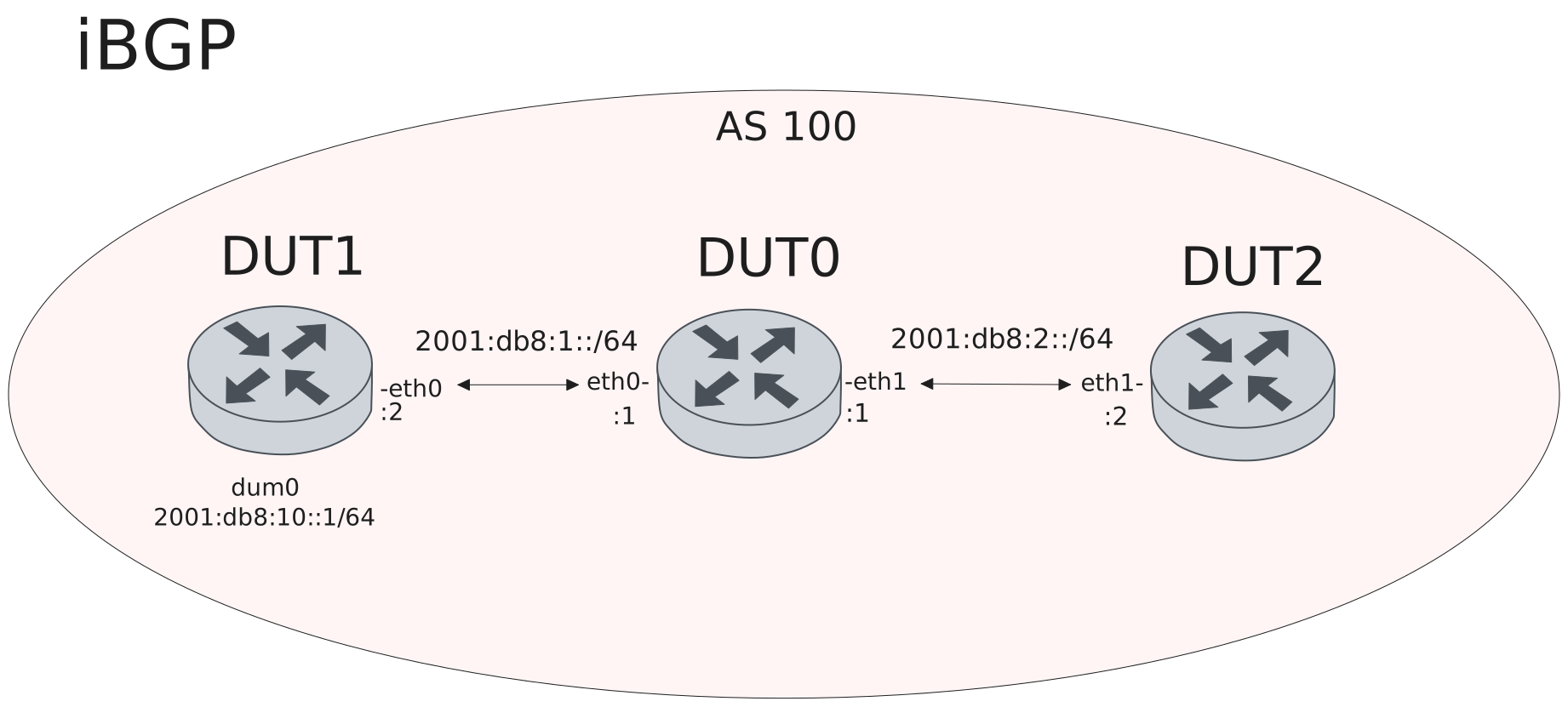
iBGP IPv6 - Without peer-group route-reflector does not propagate routes
Description
Verify that without route-reflector-client, iBGP does not re-announce
routes learned from one peer to another (split-horizon rule). DUT1 announces
a network but DUT2 does not receive it.
Scenario
Step 1: Set the following configuration in DUT0 :
set interfaces ethernet eth0 address '2001:db8:1::1/64'
set interfaces ethernet eth1 address '2001:db8:2::1/64'
set protocols bgp 100 neighbor client1 address-family ipv6-unicast activate
set protocols bgp 100 neighbor client1 peer-group MYGROUP
set protocols bgp 100 neighbor client1 remote-address '2001:db8:1::2'
set protocols bgp 100 neighbor client1 remote-as 100
set protocols bgp 100 neighbor client2 address-family ipv6-unicast activate
set protocols bgp 100 neighbor client2 peer-group MYGROUP
set protocols bgp 100 neighbor client2 remote-address '2001:db8:2::2'
set protocols bgp 100 neighbor client2 remote-as 100
set protocols bgp 100 parameters router-id 1.1.1.100
set protocols bgp 100 peer-group MYGROUP remote-as 100
set system login user admin authentication encrypted-password '$6$GSjsCj8gHLv$/VcqU6FLi6CT2Oxn0MJQ2C2tqnRDrYKNF8HIYWJp68nvXvPdFccDsT04.WtigUONbKYrgKg8d6rEs8PjljMkH0'
Step 2: Set the following configuration in DUT1 :
set interfaces dummy dum0 address '2001:db8:10::1/64'
set interfaces ethernet eth0 address '2001:db8:1::2/64'
set protocols bgp 100 address-family ipv6-unicast redistribute connected
set protocols bgp 100 neighbor rr address-family ipv6-unicast activate
set protocols bgp 100 neighbor rr remote-address '2001:db8:1::1'
set protocols bgp 100 neighbor rr remote-as 100
set protocols bgp 100 parameters router-id 1.1.1.1
set system login user admin authentication encrypted-password '$6$GSjsCj8gHLv$/VcqU6FLi6CT2Oxn0MJQ2C2tqnRDrYKNF8HIYWJp68nvXvPdFccDsT04.WtigUONbKYrgKg8d6rEs8PjljMkH0'
Step 3: Set the following configuration in DUT2 :
set interfaces ethernet eth1 address '2001:db8:2::2/64'
set protocols bgp 100 neighbor rr address-family ipv6-unicast activate
set protocols bgp 100 neighbor rr remote-address '2001:db8:2::1'
set protocols bgp 100 neighbor rr remote-as 100
set protocols bgp 100 parameters router-id 1.1.1.2
set system login user admin authentication encrypted-password '$6$GSjsCj8gHLv$/VcqU6FLi6CT2Oxn0MJQ2C2tqnRDrYKNF8HIYWJp68nvXvPdFccDsT04.WtigUONbKYrgKg8d6rEs8PjljMkH0'
Attention
Verify iBGP sessions are established between DUT0 and both clients.
Step 4: Run command protocols bgp show ipv6 summary at DUT0 and check if output matches the following regular expressions:
2001:db8:1::2.*Established[\s\S]*2001:db8:2::2.*EstablishedShow output
IPv6 Unicast Summary:
BGP router identifier 1.1.1.100, local AS number 100 VRF default vrf-id 0
BGP table version 2
RIB entries 3, using 384 bytes of memory
Peers 2, using 47 KiB of memory
Peer groups 1, using 64 bytes of memory

Neighbor        LocalAddr       V         AS   MsgRcvd   MsgSent   TblVer  InQ OutQ  Up/Down        State   PfxRcd   PfxSnt Desc
2001:db8:1::2   0.0.0.0         4        100         6         4        2    0    0 00:00:02  Established        2        0 FRRouting/10.4.1
2001:db8:2::2   0.0.0.0         4        100         2         3        0    0    0 00:00:00  Established        0        0 FRRouting/10.4.1

Total number of neighbors 2
Attention
Verify DUT2 does NOT receive the route 2001:db8:10::/64 (iBGP split-horizon).
Step 5: Run command protocols bgp show ipv6 at DUT2 and check if output does not match the following regular expressions:
2001:db8:10::/64Show output
No BGP prefixes displayed, 0 exist
iBGP IPv6 - Peer-group route-reflector-client reflects routes between clients
Description
Verify that route-reflector-client configured on a peer-group enables the
Route Reflector to reflect routes from one iBGP client to another. DUT1 announces
a network and DUT2 receives it via DUT0 (the RR).
Scenario
Step 1: Set the following configuration in DUT0 :
set interfaces ethernet eth0 address '2001:db8:1::1/64'
set interfaces ethernet eth1 address '2001:db8:2::1/64'
set protocols bgp 100 neighbor client1 address-family ipv6-unicast activate
set protocols bgp 100 neighbor client1 peer-group MYGROUP
set protocols bgp 100 neighbor client1 remote-address '2001:db8:1::2'
set protocols bgp 100 neighbor client1 remote-as 100
set protocols bgp 100 neighbor client2 address-family ipv6-unicast activate
set protocols bgp 100 neighbor client2 peer-group MYGROUP
set protocols bgp 100 neighbor client2 remote-address '2001:db8:2::2'
set protocols bgp 100 neighbor client2 remote-as 100
set protocols bgp 100 parameters router-id 1.1.1.100
set protocols bgp 100 peer-group MYGROUP address-family ipv6-unicast route-reflector-client
set protocols bgp 100 peer-group MYGROUP remote-as 100
set system login user admin authentication encrypted-password '$6$GSjsCj8gHLv$/VcqU6FLi6CT2Oxn0MJQ2C2tqnRDrYKNF8HIYWJp68nvXvPdFccDsT04.WtigUONbKYrgKg8d6rEs8PjljMkH0'
Step 2: Set the following configuration in DUT1 :
set interfaces dummy dum0 address '2001:db8:10::1/64'
set interfaces ethernet eth0 address '2001:db8:1::2/64'
set protocols bgp 100 address-family ipv6-unicast redistribute connected
set protocols bgp 100 neighbor rr address-family ipv6-unicast activate
set protocols bgp 100 neighbor rr remote-address '2001:db8:1::1'
set protocols bgp 100 neighbor rr remote-as 100
set protocols bgp 100 parameters router-id 1.1.1.1
set system login user admin authentication encrypted-password '$6$GSjsCj8gHLv$/VcqU6FLi6CT2Oxn0MJQ2C2tqnRDrYKNF8HIYWJp68nvXvPdFccDsT04.WtigUONbKYrgKg8d6rEs8PjljMkH0'
Step 3: Set the following configuration in DUT2 :
set interfaces ethernet eth1 address '2001:db8:2::2/64'
set protocols bgp 100 neighbor rr address-family ipv6-unicast activate
set protocols bgp 100 neighbor rr remote-address '2001:db8:2::1'
set protocols bgp 100 neighbor rr remote-as 100
set protocols bgp 100 parameters router-id 1.1.1.2
set system login user admin authentication encrypted-password '$6$GSjsCj8gHLv$/VcqU6FLi6CT2Oxn0MJQ2C2tqnRDrYKNF8HIYWJp68nvXvPdFccDsT04.WtigUONbKYrgKg8d6rEs8PjljMkH0'
Attention
Verify iBGP sessions are established between DUT0 (RR) and both clients.
Step 4: Run command protocols bgp show ipv6 summary at DUT0 and check if output matches the following regular expressions:
2001:db8:1::2.*Established[\s\S]*2001:db8:2::2.*EstablishedShow output
IPv6 Unicast Summary:
BGP router identifier 1.1.1.100, local AS number 100 VRF default vrf-id 0
BGP table version 2
RIB entries 3, using 384 bytes of memory
Peers 2, using 47 KiB of memory
Peer groups 1, using 64 bytes of memory

Neighbor        LocalAddr       V         AS   MsgRcvd   MsgSent   TblVer  InQ OutQ  Up/Down        State   PfxRcd   PfxSnt Desc
2001:db8:1::2   0.0.0.0         4        100         6         5        2    0    0 00:00:02  Established        2        2 FRRouting/10.4.1
2001:db8:2::2   0.0.0.0         4        100         2         3        0    0    0 00:00:01  Established        0        0 FRRouting/10.4.1

Total number of neighbors 2
Attention
Verify DUT2 receives the route 2001:db8:10::/64 via route reflection.
Step 5: Run command protocols bgp show ipv6 at DUT2 and check if output matches the following regular expressions:
2001:db8:10::/64Show output
BGP table version is 0, local router ID is 1.1.1.2, vrf id 0
Default local pref 100, local AS 100
local address -
Status codes:  s suppressed, d damped, h history, u unsorted, * valid, > best, = multipath,
               i internal, r RIB-failure, S Stale, R Removed
Nexthop codes: @NNN nexthop's vrf id, < announce-nh-self
Origin codes:  i - IGP, e - EGP, ? - incomplete
RPKI validation codes: V valid, I invalid, N Not found

     Network          Next Hop            Metric LocPrf Weight Path
   i 2001:db8:1::/64  2001:db8:1::2            0    100      0 ?
   i 2001:db8:10::/64 2001:db8:1::2            0    100      0 ?

Displayed 2 routes and 2 total paths